Two-Player Oceanic Logic Journey
Developer: Rune Veil Digital
Updated: 2026-07-22
Reviews
Two-Player Oceanic Logic Journey succeeds by making cooperation essential rather than optional. The split-control design forces players to communicate clearly, turning simple puzzles into satisfying joint achievements. The bright, friendly visuals and lack of pressure make it ideal for families. While the puzzle variety is modest, the quality of interaction it generates is rare. A solid choice for anyone seeking a positive shared gaming experience.
Description
Shared Control System
Each player manages distinct functions of the submarine. One person typically handles directional movement and navigation, while the other operates interaction tools like grabbing objects or activating mechanisms. This division of responsibilities forces constant dialogue and planning, as neither player can complete a task alone. The control scheme is intentionally simple, using basic keyboard keys or a gamepad, so the focus stays on cooperation rather than complex inputs.Puzzle Design Philosophy
Challenges revolve around environmental manipulation rather than combat or time pressure. Players might need to reposition floating crates to create a bridge, align light beams to open a sealed passage, or coordinate timing to push a heavy stone off a ledge. Each puzzle has a single solution that requires both players to contribute, ensuring that neither feels left out. The difficulty curve is gentle, introducing new mechanics gradually without overwhelming younger participants.Visual Atmosphere
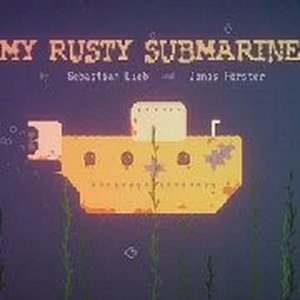
The underwater world is depicted with bright, saturated colors and friendly sea creatures. Coral formations glow in shades of pink and orange, while schools of small fish drift past the submarine. The vehicle itself has a slightly battered appearance, with patches and dents that give it personality. Backgrounds are detailed but not cluttered, helping players quickly identify interactive elements like levers or treasure chests.Exploration Rewards
Hidden collectibles are tucked inside crevices or behind movable rocks. Finding them requires careful observation and sometimes backtracking after acquiring a new ability. These treasures are purely cosmetic, adding to the sense of discovery without affecting progression. This design choice encourages thorough exploration without punishing players who prefer to move quickly through the main path.Player Interaction Flow
Levels are structured so that each player gets moments of individual focus followed by joint effort. For example, one player might need to hold a switch while the other navigates through a narrow gap. This alternation prevents either person from feeling passive and reinforces the need for clear verbal cues. The game includes no competitive elements, so the only goal is mutual success.Compatibility
💻 Desktop | 📱 Mobile | 📟 Tablet
– All supported · Best with Chrome or Safari
Faq
Can I play Two-Player Oceanic Logic Journey alone?
No, this game requires two human players. There is no single-player mode or AI partner. The puzzles are specifically designed so that one person cannot complete them alone, as each player controls different functions of the submarine.
What platforms is Two-Player Oceanic Logic Journey available on?
The game is typically available on PC via digital storefronts. Some versions may also be released on consoles. Check the official store page for your preferred platform to confirm availability.
Is there any text or dialogue in the game?
The game uses minimal text, mostly for menu options and level titles. Puzzle instructions are conveyed through visual cues and environmental design, making it accessible to players who may not read fluently.
How long does it take to complete the game?
Playtime varies based on how thoroughly players explore and how quickly they solve puzzles. A typical playthrough may last between 4 to 6 hours, but collecting all hidden treasures can extend that time.
Does the game support different control options?
Yes, players can use either a keyboard or a gamepad. The game supports mixed input, so one player can use a keyboard while the other uses a controller. Both players need their own input device.
Are there any difficulty settings or adjustable options?
The game does not include traditional difficulty settings. Instead, the puzzles are designed with a gentle learning curve, and players can take as much time as needed. There are no timers or penalties for mistakes.